
BATTERIES
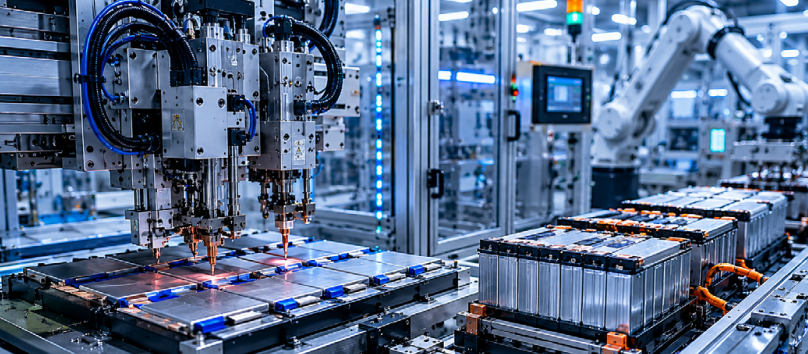
Extraction and management of fine and reactive dust during the production, assembly and recycling of lithium-ion batteries. Ideal for controlling contamination, cleaning automated production lines and recovering high-value materials such as black mass, ensuring operational safety.
Slurry Mixing
Slurry MixingCoating & Drying
Coating & DryingCalendering
CalenderingSlitting
SlittingCell Assembly
Cell AssemblySlurry Mixing
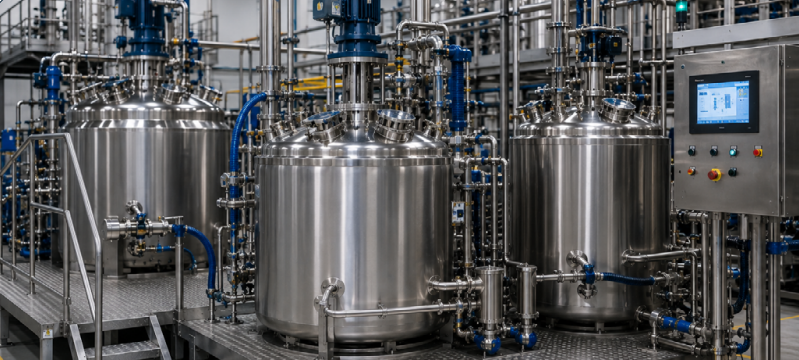
Slurry mixing phase, powdered raw materials – such as active ingredients, conductive additives and binders – are measured out and mixed with solvents to produce a homogeneous paste known as a slurry. This mixture must then be applied to the metal collectors, so uniformity, contamination control and dust management are critical factors.
Dupuy ties in perfectly at this stage thanks to its ability to vacuum fine dust and process residues directly into the dosing and mixing areas. Where technical or potentially sensitive powders are present, specific solutions can also be evaluated in an ATEX configuration.
Coating & Drying
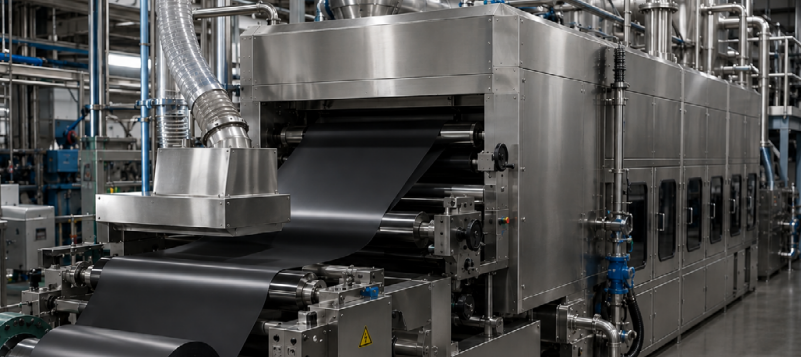
During the Coating & Drying phase, the slurry is uniformly deposited on copper or aluminum foil and then dried through ovens or controlled drying systems. The process enables the liquid mixture to be transformed into a solid, stable electrode layer ready for further processing.
Our solution can be integrated to extract dry residues, light dust, and particles generated along the coating line and in the areas leading out of the drying section. This helps keep the line clean, reduce contamination, and improve the continuity of the production process.
Calendering
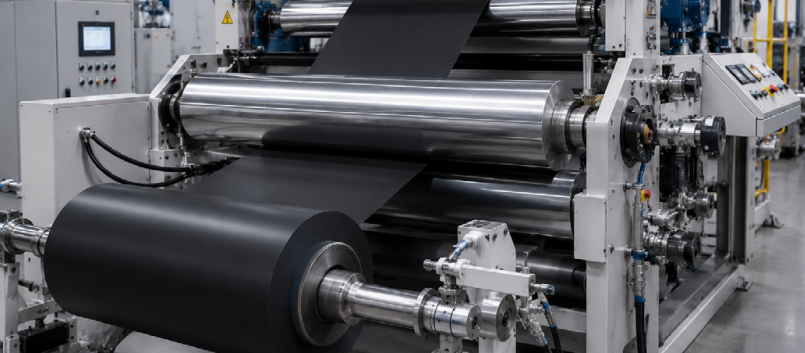
In the Calendering, the dried electrode is passed between high-precision rollers that compress its thickness, increasing its density and improving the adhesion of the material to the metal collector. This step is critical to achieving consistent electrochemical performance and uniform mechanical properties.
With our systems, we enter the calendering stage to remove fine dust, dry residue and particles that may become detached during material compression. Localized suction helps protect rollers, limit contamination and maintain stable product quality.
Slitting
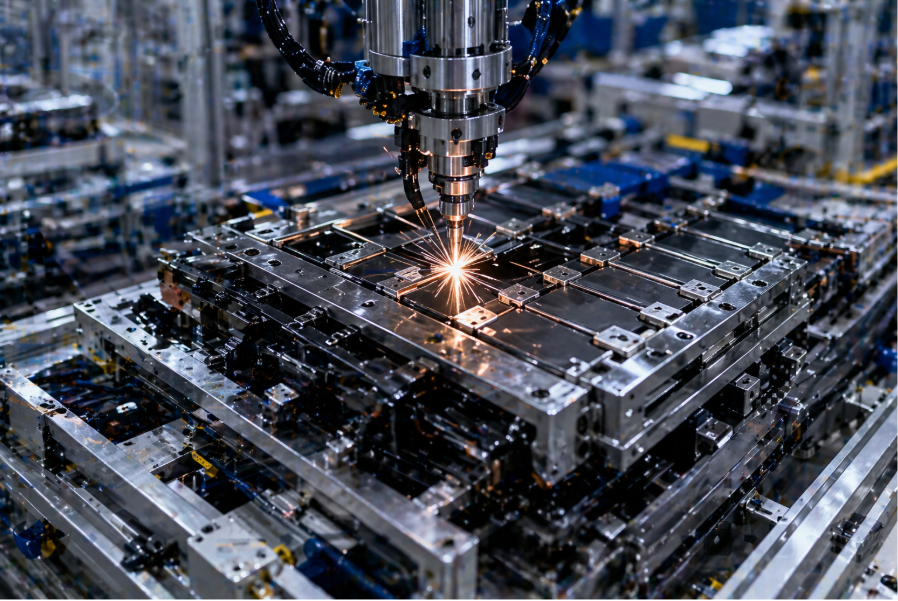
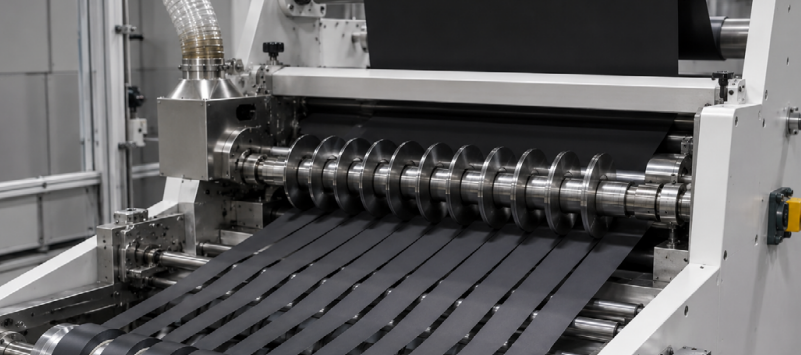
La fase di Slitting consists of cutting the electrode tape into narrower coils or strips according to the dimensions required for the cell assembly. Scrap, fine particles, active material dust, and metal debris from the edges of the foil may be generated during cutting.
The use of dust collectors and systems of localized suction It captures fine dust, dry residues, particles, and debris directly at the source, where they are generated during the production process. This reduces particle dispersion, protects the production environment, and limits the risk of contamination prior to assembly.
Cell Assembly
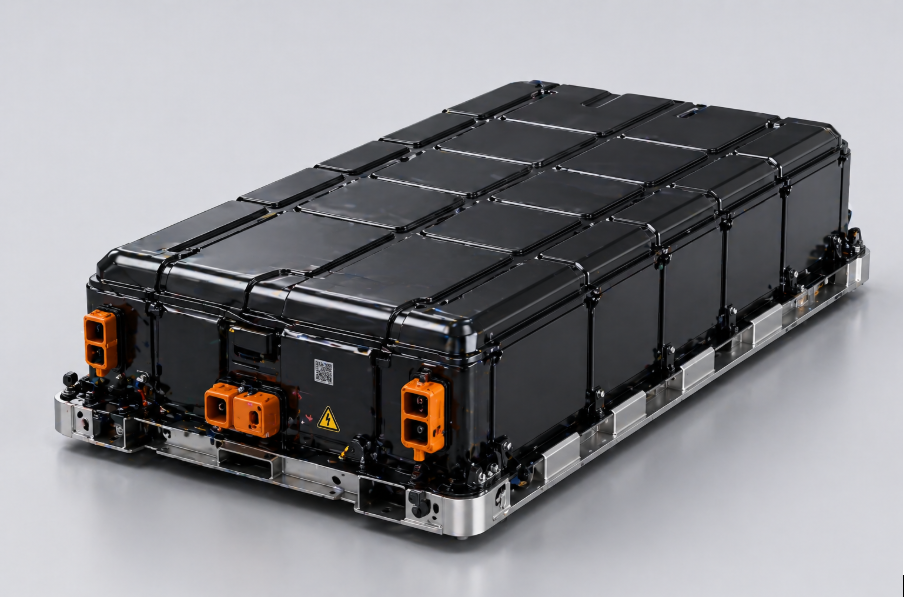
Nel Cell Assembly, the cut electrodes are combined with the separators through stacking or winding processes and then inserted into the intended cell format, such as pouch, cylindrical, or prismatic. This is a highly critical step because even small residual particles can compromise the quality of the cell or generate internal defects.
Through the use of an industrial vacuum cleaner, this phase would be supported by vacuum systems dedicated to the technical cleaning of assembly areas and the controlled removal of residual particles.