


Is the dust still in the air when you try to remove it? The problem may not be a lack of power. It may be the type of extraction system you are using.
The industrial vacuum vs dust collector for Airborne Dust question starts with one simple observation: where is the dust? Dust on floors, machines or work surfaces behaves differently from dust suspended in the air. Therefore, the two problems require different extraction principles.
Adding more motor power does not automatically improve airborne dust capture. You need the right balance of airflow, vacuum pressure, filtration and capture geometry. Once these elements match the application, dust control becomes more effective and predictable.
Start by asking where the dust is
Settled dust has already fallen onto a surface. It may collect on machinery, floors, production lines or inside equipment. In this case, the system must lift the material and transport it through a hose.
Airborne dust is different. Fine, light particles remain suspended and move with surrounding air currents. They may spread beyond the workstation before they settle. As a result, cleaning the floor addresses the residue, not the source.
The first diagnostic question is not how powerful the machine is. Ask whether the material is already deposited or still moving through the air.
Industrial vacuum vs dust collector for Airborne Dust
An industrial vacuum and a dust collector both remove unwanted material. However, they are designed around different operating needs.
When an industrial vacuum cleaner is the right choice
An industrial vacuum cleaner is designed to collect material that has settled or accumulated. It typically combines strong vacuum pressure with hoses and accessories suited to direct cleaning.
Typical tasks include cleaning floors, machinery and work areas. Industrial vacuums can also remove heavier dust, chips or process residues. The exact configuration depends on the material and operating conditions.
When an industrial dust collector is the right choice
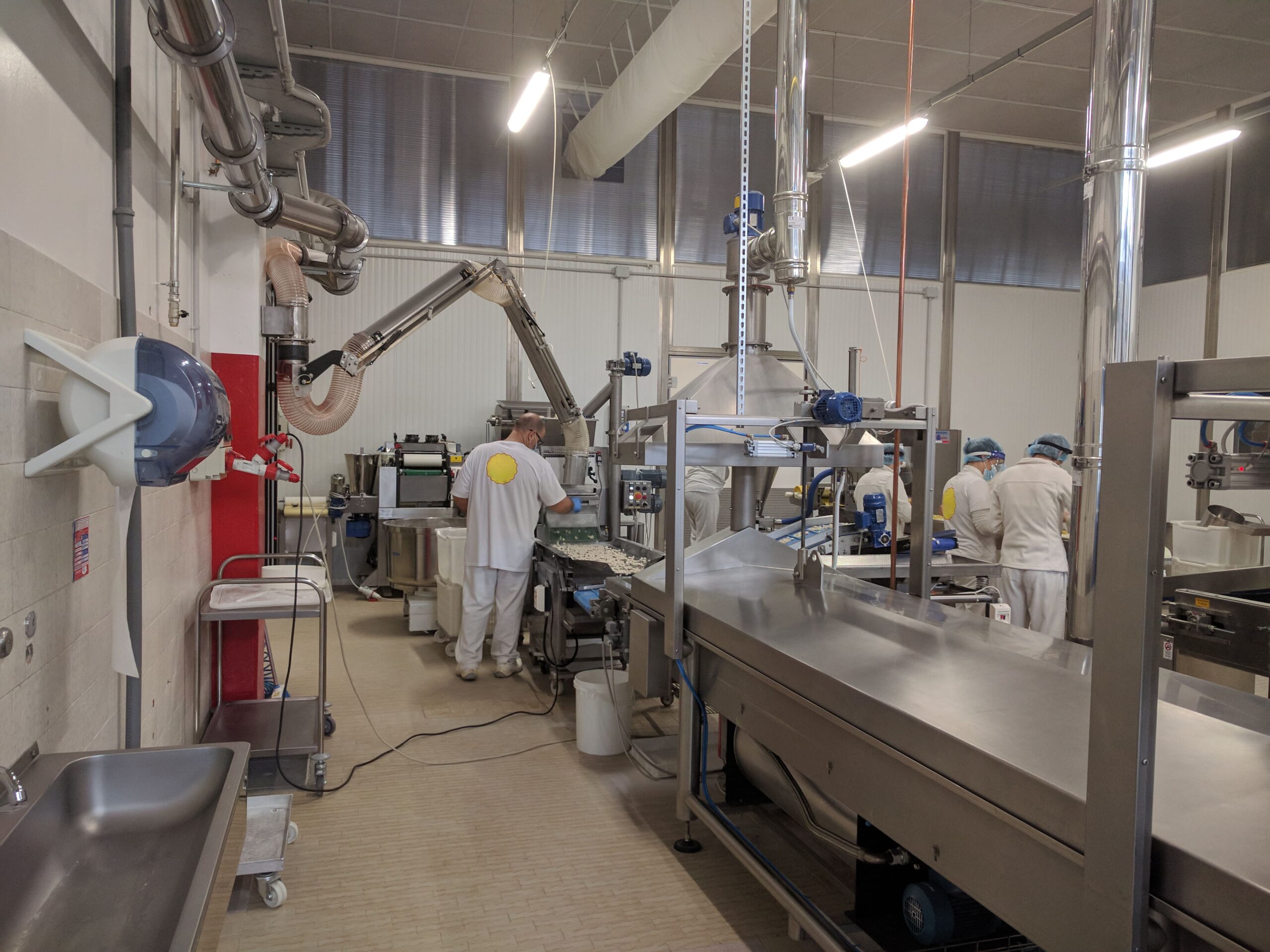
Industrial dust collectors move a larger volume of air to capture light particles before they disperse. A hood, extraction arm or machine connection collects the contaminated airflow close to the source.
This approach is suitable for dust created during sanding, grinding, cutting, weighing, mixing or material transfer. It can support one workstation or several extraction points within a centralised system.
Why more suction power may not solve the problem
Vacuum pressure describes the system’s ability to overcome resistance and lift material. Airflow describes how much air the system moves over time. Both matter, but they do different jobs.
A narrow hose with strong vacuum pressure can collect deposited material effectively. Yet it may not capture a wide cloud of fine dust. Airborne particles often require higher airflow across a correctly positioned capture area.
The hood or extraction arm must also be close enough to the point of generation. Otherwise, surrounding air currents can carry the particles away.
How to recognise an airborne dust application
An industrial dust collector may be the correct starting point when:
- a visible cloud appears during the process
- fine particles remain suspended after the operation stops
- dust spreads beyond the machine or workstation
- operators repeatedly clean nearby surfaces
- the process generates light dust across a broad capture area
- one or more machines need extraction during production
These signs do not replace a technical assessment. However, they help identify when conventional cleaning equipment is addressing the consequence rather than controlling the source.
Can an industrial vacuum and dust collector work together
In many facilities, the industrial vacuum vs dust collector decision is not an either-or choice. The two systems can perform complementary tasks.
The dust collector captures suspended particulate during production. The industrial vacuum then removes material deposited on machinery, floors or enclosed areas. Together, they support process extraction and routine housekeeping.
This distinction also helps teams select clearer procedures. Operators know which equipment to use during production and which to use during cleaning.
What determines the correct dust extraction system
A reliable selection starts with the process, not the product catalogue. Before sizing a system, collect the following information.
Dust characteristics. Identify particle size, density, abrasiveness, moisture and any hazardous or combustible properties.
Generation point. Determine exactly where the dust becomes airborne and how it moves away from the process.
Dust volume. Assess the quantity produced during normal work, peaks and different production cycles.
Operating time. Establish whether extraction is occasional, continuous or required across several shifts.
Capture points. Record the number of machines, hoods or workstations that may operate at the same time.
System layout. Consider duct length, diameter, bends, available space and the position of the collection unit.
Filtration and discharge. Define the required filtration, filter cleaning method and how collected material will be handled.
If the dust may be combustible, the assessment must also consider the classified area and the properties of the material. Equipment selection should follow the applicable risk assessment and safety requirements.
From capture point to filter performance
The extraction unit is only one part of the result. Hoods, arms, ducts and filters must operate as one system. Poor capture geometry can weaken an otherwise capable collector. Long or restrictive pipework can also reduce performance.
Filter surface and cleaning strategy matter as well. Dust loading can increase resistance over time. Therefore, filter maintenance must suit the duty cycle.
For demanding applications, the DEDUST ELF range combines automatic filter cleaning, aerodynamic pre-separation and performance control. The correct model and configuration still depend on the application data.
Choose the system around the dust and the process
The industrial vacuum vs dust collector question becomes easier once you observe the material. Use an industrial vacuum for deposited residues that require direct cleaning. Use a dust collector when light particles must be captured from the air near their source.
In some plants, the best solution combines both. What matters is matching airflow, vacuum pressure, filtration and capture design to real operating conditions.
Is dust still escaping into the workplace? Contact the Dupuy team to review your process, dust characteristics and extraction points. We will help you identify the most suitable configuration for your application.